

How to Check Your Home’s Water Pressure
Have you ever wondered whether the water pressure in your home is too high or too low?
At Barry Williams Plumbing, we’re often asked what normal household water pressure should be and how homeowners can check it themselves.
The good news is that checking your water pressure is relatively simple, and an inexpensive pressure gauge is all you need.
What Is Normal Water Pressure?
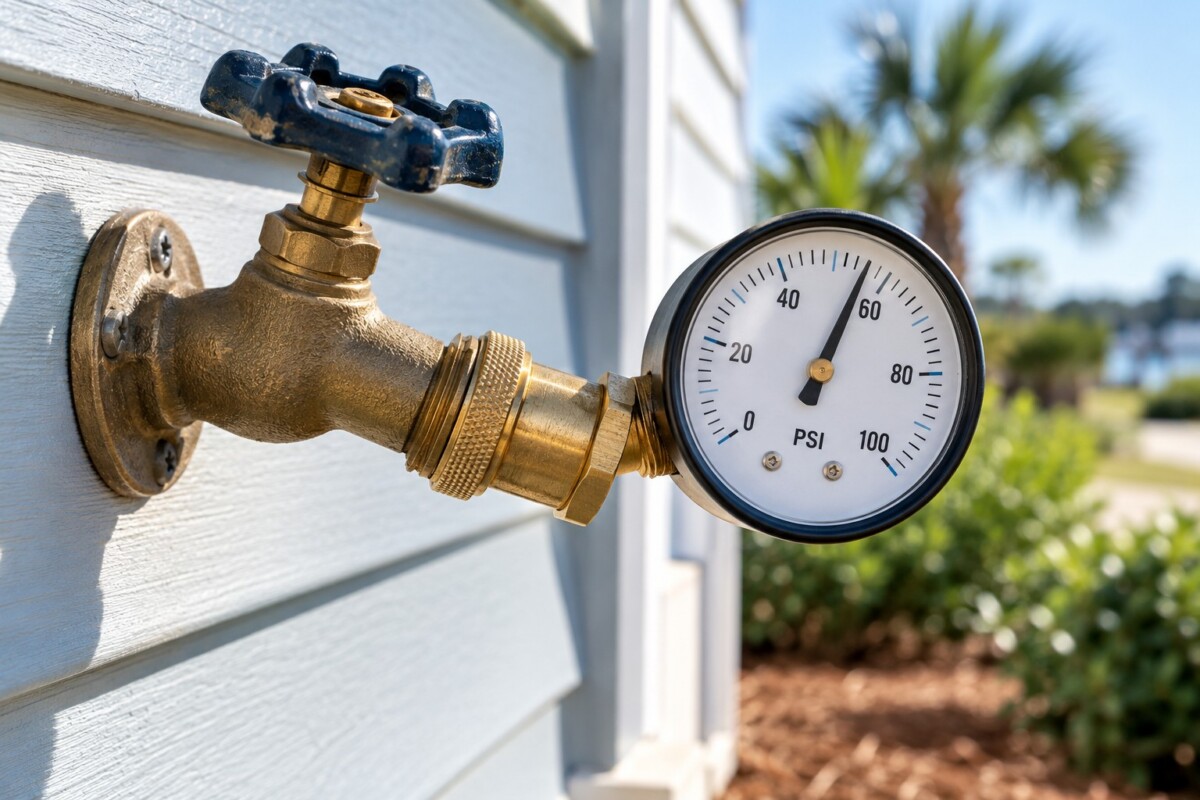
For most homes, water pressure between 50 and 60 PSI provides comfortable performance.
Pressure above 80 PSI is excessive and generally requires pressure regulation under plumbing code requirements.
Excessive water pressure can contribute to leaking faucets, running toilets, premature appliance failures, and unnecessary stress on your plumbing system.
What You’ll Need
- A water pressure gauge with a standard garden hose connection.
- Access to an outdoor hose faucet or washing machine connection.
How to Check Your Water Pressure
- Turn off all water fixtures. Make sure no faucets, showers, washing machines, or other water-using appliances are operating.
- Locate an outdoor hose faucet. Choose one supplied by your home’s plumbing system, preferably downstream of any pressure-reducing valve.
- Attach the pressure gauge. Screw the gauge onto the hose faucet and tighten it enough to prevent leaks.
- Open the faucet completely. The gauge will display your home’s static water pressure.
- Read the pressure. A reading around 50–60 PSI is generally comfortable for residential plumbing. Readings above 80 PSI warrant professional evaluation.
- Close the faucet. Release the trapped pressure safely and remove the gauge.
What If Your Water Pressure Is Too High?
If your pressure exceeds 80 PSI, your home may need a pressure-reducing valve (PRV), or an existing PRV may need adjustment or replacement.
High pressure can also be caused by thermal expansion when water is heated in a closed plumbing system.
If your pressure rises significantly while the water heater operates, have your thermal expansion control system evaluated.
What If Your Water Pressure Is Too Low?
Low water pressure can have several causes, including a partially closed valve, clogged filters, a malfunctioning pressure-reducing valve, or a problem with the water supply.
Keep in mind that a normal static pressure reading does not necessarily mean your home has adequate water flow when several fixtures are running.
When Should You Call a Plumber?
If your water pressure is consistently above 80 PSI, unusually low, or fluctuates significantly, it’s a good idea to have your plumbing system inspected.
Barry Williams Plumbing can help diagnose water pressure problems, inspect pressure-reducing valves, and evaluate thermal expansion concerns.
A simple pressure check today could help prevent costly plumbing repairs tomorrow.