


Why Is My Garbage Disposal Not Working?
Have you ever flipped the switch on your garbage disposal and heard nothing? Maybe the motor hums but the disposal won’t turn, or perhaps the disposal runs but the kitchen sink won’t drain.
Garbage disposal problems are common, but many of them are caused by how the disposal is being used rather than a mechanical failure.
At Barry Williams Plumbing, we’ve seen kitchen drains clogged with everything from potato peels and pasta to rice, grease, and other food waste that never should have been washed down the sink.
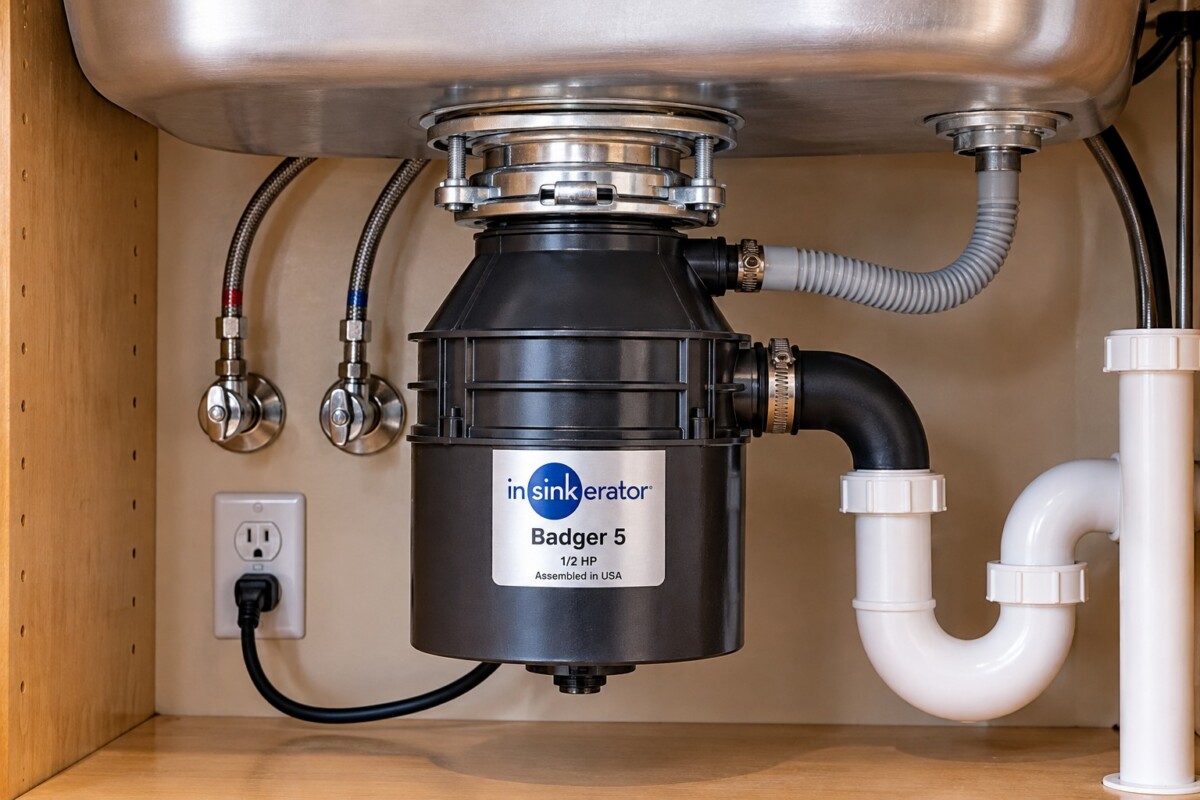
One of the most important things homeowners should understand is that a garbage disposal is not a substitute for a trash can.
Let’s look at why garbage disposals stop working, what causes kitchen drain blockages, and how to avoid unnecessary plumbing repairs.
What Is a Garbage Disposal Actually Designed to Do?
A residential garbage disposal is designed to grind small amounts of leftover food into particles that can be carried away through the kitchen drain.
Contrary to what many homeowners believe, a disposal does not have spinning knife blades like a blender.
Instead, it uses a rotating grinding plate with impellers that push food waste against a stationary grinding ring.
The resulting particles are washed through the drain piping with water.
But just because a disposal can grind something doesn’t mean that material belongs in your plumbing system.
Here’s the rule we recommend: Scrape your plate into the trash can first. Use the garbage disposal only for the small food particles left behind.
1. Why You Should Never Put a Colander Full of Potato Peels Down the Disposal
One of the biggest mistakes homeowners make is peeling several pounds of potatoes into the kitchen sink and then trying to grind all the peels through the garbage disposal.
Potato peels contain starch and fibrous material. When large quantities are ground together and mixed with water, they can form a thick, pasty mass that restricts the drain.
Even if the disposal successfully grinds the peels, the material still has to travel through the P-trap, branch drain, and connecting piping.
That’s where the real problem often occurs.
A garbage disposal may grind the potato peels, but it cannot guarantee that the drain piping will carry them away.
When enough material accumulates, the kitchen sink may begin draining slowly or stop draining altogether.
Our advice: Peel potatoes into a bowl, onto newspaper, or into a colander over a container. Empty the peels into the trash or an appropriate compost collection rather than the sink.
2. Why Pasta and Rice Can Clog Your Kitchen Drain
Another common mistake is dumping an entire pot of leftover pasta or rice into the garbage disposal.
Pasta and rice absorb water and contain starch. When large quantities enter the drain, they can accumulate and contribute to a blockage.
Grinding them into smaller pieces doesn’t eliminate the problem.
Instead, the disposal may send a large volume of soft, starchy material into the drain piping all at once.
As the material accumulates in a P-trap or horizontal drain line, it can restrict the passage of wastewater.
Remember: The garbage disposal is not designed to empty a pot of spaghetti, macaroni, or rice into the plumbing system.
Scrape leftovers into the trash before rinsing dishes.
3. Grease, Oil, and Fat Should Never Go Down the Drain
Cooking grease is another major contributor to kitchen drain blockages.
When hot grease is poured into a sink, it may initially flow through the drain as a liquid.
As it cools, however, some fats can thicken or solidify and adhere to the inside of the piping.
Over time, grease can trap food particles and other debris, gradually reducing the available opening inside the drain.
Never assume that running hot water or using a garbage disposal makes grease safe to pour down the drain.
Instead, allow grease to cool and dispose of it according to local waste guidelines. Small amounts can often be wiped from cookware with a paper towel before washing.
4. Fibrous Foods Can Jam a Garbage Disposal
Some foods contain long, stringy fibers that can wrap around the disposal’s moving components or contribute to a jam.
Examples include:
- Celery stalks and strings.
- Corn husks and corn silk.
- Artichoke leaves.
- Large quantities of onion skins.
- Other tough, fibrous vegetable scraps.
These materials are better placed in the trash or an appropriate compost collection.
If the disposal becomes jammed, the motor may hum without turning, or its overload protection may shut the unit off.
5. The Garbage Disposal Hums but Won’t Spin
If you flip the switch and hear a humming noise but the disposal doesn’t turn, the grinding mechanism may be jammed.
Common causes include:
- Utensils or other foreign objects accidentally entering the disposal.
- Hard food scraps lodged in the grinding chamber.
- Fibrous material restricting movement.
- A worn or failing motor.
Important safety warning: Turn off the disposal immediately if it hums without operating. Leaving the motor energized while jammed can cause overheating or damage.
Disconnect the disposal from electrical power before any inspection or attempt to clear a jam. Switching it off at the wall alone is not a substitute for disconnecting power.
Never place your hand inside a garbage disposal, even when the switch is off.
Some manufacturers provide a specific wrench or jam-clearing tool for manually rotating the grinding mechanism. Follow the instructions for your exact model, and do not force the mechanism.
If the jam cannot be cleared safely, contact a qualified professional.
6. The Garbage Disposal Won’t Turn On at All
If your garbage disposal makes no sound when you flip the switch, the problem may be electrical rather than mechanical.
Many garbage disposals have a built-in overload protector with a reset button, often located on the bottom of the unit.
This protection may activate when the motor overheats or becomes overloaded.
Possible causes include:
- A tripped overload protector.
- A tripped circuit breaker or GFCI device.
- A defective wall switch or air switch.
- A disconnected power cord.
- A failed disposal motor.
If the manufacturer permits resetting the unit, first turn the switch off, disconnect power, and make sure any jam has been safely resolved. Follow the manufacturer’s reset procedure before restoring power.
If the reset button repeatedly trips, stop using the disposal and have it inspected.
Never repeatedly reset a disposal that continues to overheat or trip its protection.
7. The Disposal Runs but the Sink Won’t Drain
This is one of the most misunderstood garbage disposal problems.
Homeowners sometimes assume that because the disposal motor is running, the sink should drain normally.
However, the disposal and the drain piping perform two different functions.
The disposal grinds food particles. The drain piping must then carry those particles away.
If the P-trap or kitchen drain line becomes clogged with grease, starch, food debris, or other material, the disposal may operate perfectly while the sink remains full of water.
Common warning signs include:
- Water backing up into the kitchen sink.
- Slow drainage after using the disposal.
- Water appearing in the opposite basin of a double sink.
- Gurgling sounds from the kitchen drain.
- Recurring clogs after disposing of large quantities of food.
In these situations, the problem may be in the P-trap, the kitchen branch drain, or farther downstream.
Important: Do not continue running the disposal in an attempt to force a blockage through the drain. Avoid chemical drain cleaners, particularly when a garbage disposal is installed.
8. Why Your Garbage Disposal Is Leaking
Garbage disposals can also develop leaks at several different locations.
Common leak locations include:
- The sink flange where the disposal attaches to the sink.
- The dishwasher drain hose connection.
- The discharge connection leading to the drain piping.
- Gaskets and seals around the mounting assembly.
- The bottom of the disposal housing.
A leak at a drain connection or mounting gasket may be repairable.
However, water leaking from the bottom of the disposal housing can indicate internal seal failure or deterioration of the unit.
In those cases, replacement may be more practical than repair.
Safety warning: If water is leaking near the disposal’s electrical components, stop using the unit and disconnect power only if you can do so safely. Otherwise, contact a qualified professional.
9. Why Does My Garbage Disposal Smell Bad?
Unpleasant odors can develop when food particles accumulate inside the grinding chamber, beneath the splash guard, or in nearby drain piping.
These particles may begin to decompose, creating an unpleasant smell around the kitchen sink.
Possible causes include:
- Food trapped beneath the rubber splash guard.
- Accumulated residue inside the grinding chamber.
- Grease and food buildup in the drain piping.
- A partially clogged kitchen drain.
Follow the manufacturer’s recommended cleaning procedure for your disposal.
Avoid mixing cleaning chemicals or using harsh drain cleaners that may damage components or create a safety hazard.
If odors persist after appropriate cleaning, the drain piping may need further inspection.
10. How to Use Your Garbage Disposal Properly
Proper disposal use can help reduce jams, odors, and kitchen drain blockages.
We recommend the following habits:
- Scrape plates into the trash first. Remove leftover food before rinsing dishes.
- Never dump large quantities of food into the disposal. Potato peels, pasta, rice, and vegetable scraps belong in the trash or an appropriate compost collection.
- Keep grease out of the drain. Dispose of cooking fats and oils separately.
- Use cold water during operation. Follow the manufacturer’s instructions for water flow and operation.
- Feed only small amounts of suitable food residue at a time. Avoid overloading the grinding chamber.
- Continue running water as directed by the manufacturer. This helps carry ground particles through the drain.
- Keep utensils and foreign objects out. Never reach into the disposal to retrieve an object.
These simple habits can help prevent unnecessary repairs and keep your kitchen drain working properly.
The Biggest Garbage Disposal Misconception
Many homeowners think that if food fits through the sink opening, the garbage disposal should be able to handle it.
Unfortunately, that’s not how a plumbing drainage system works.
A disposal may grind food into smaller pieces, but those pieces still have to travel through the drain piping.
Large quantities of starchy, fibrous, or greasy food can accumulate in the piping and create blockages even when the disposal itself is functioning normally.
Think of your garbage disposal as a cleanup tool, not a food waste disposal system.
Scrape your plate into the trash can. Then use the disposal to handle the small amount of food residue remaining after meals.
When Should You Call a Plumber?
Some disposal problems involve simple maintenance, but others require professional attention.
Consider calling a plumber if:
- The disposal hums but won’t turn after appropriate troubleshooting.
- The reset button repeatedly trips.
- Water backs up into the sink even though the disposal runs.
- The disposal leaks beneath the sink.
- Kitchen drain clogs keep returning.
- The disposal makes unusual grinding or rattling noises.
- The unit is old, corroded, or no longer operating reliably.
Depending on the problem, the solution may involve clearing a kitchen drain blockage, repairing a connection, or replacing the disposal.
When Should You Call Barry Williams Plumbing?
A garbage disposal is a convenient kitchen appliance, but improper use can lead to clogged drains, leaks, and unnecessary repairs.
At Barry Williams Plumbing, we can help diagnose disposal problems, repair leaking drain connections, clear kitchen drain blockages, and replace garbage disposals when necessary.
And remember our most important advice: Your garbage disposal is for the small amount of food left after you scrape your plate into the trash. It isn’t meant to handle an entire colander of potato peels or a pot of pasta.
A little care in the kitchen can save you a lot of trouble beneath the sink.