

How to Tell if Your Water Heater Is Failing
Most homeowners don’t give their water heater much thought until they suddenly find themselves without hot water. Fortunately, many water heaters show warning signs before they fail completely.
At Barry Williams Plumbing, we often find that homeowners have noticed changes in their hot water but aren’t sure whether those changes mean their water heater needs attention.
Here are some common warning signs that your water heater may need repair or replacement.
1. Your Hot Water Doesn’t Last as Long
Does your shower turn cold sooner than it used to? Are you running out of hot water when multiple fixtures are being used?
A decrease in available hot water can be caused by sediment buildup, a failing heating element in an electric water heater, thermostat problems, or other issues.
What to watch for: A noticeable change in the amount of hot water your household can use before it runs cold.
2. You Hear Popping or Rumbling Noises
As water heaters age, minerals and sediment can accumulate at the bottom of the tank.
When water becomes trapped beneath sediment deposits and heats up, it can create popping, crackling, or rumbling sounds.
These noises don’t always mean your water heater needs replacement, but they can indicate sediment buildup that should be evaluated.
3. You Notice Rusty or Discolored Hot Water
If your hot water has a reddish or brownish appearance, corrosion may be occurring somewhere in the plumbing system.
Try comparing the hot and cold water at the same fixture. If discoloration occurs only with hot water, the water heater may be involved.
However, discolored water can have several causes, so it is important to identify the source before deciding that the water heater needs replacement.
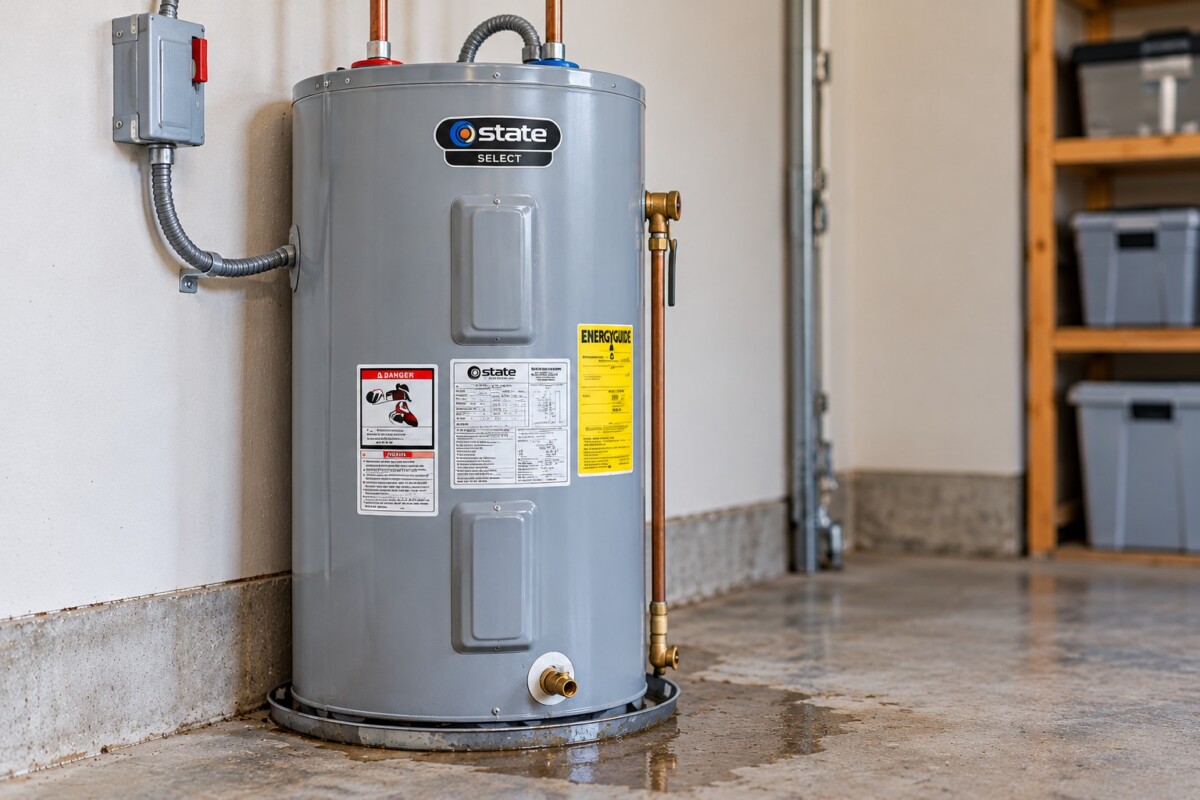
4. There’s Water Around the Base of the Heater
Water around your water heater is a warning sign that should never be ignored.
Sometimes the source is a leaking pipe connection, valve, or fitting. Other times, the tank itself may be leaking.
Important: A leaking storage tank generally cannot be repaired and typically requires replacement.
If you discover an active leak, avoid touching electrical components or standing in water near the heater. Contact a licensed plumber promptly.
5. Your Water Temperature Is Inconsistent
If your water suddenly becomes much hotter or colder than normal, your water heater may have a thermostat, heating element, control, or other component problem.
Temperature fluctuations don’t automatically mean the entire heater needs replacement. Some problems can be corrected by replacing a component.
However, unexpectedly hot water can create a scalding hazard and should be addressed promptly.
6. Your Water Heater Is Getting Older
Traditional tank-style water heaters often last approximately 8 to 12 years, although actual service life varies depending on water quality, maintenance, installation, and usage.
An older heater isn’t necessarily failing, but age becomes an important consideration when repairs are needed.
If your water heater is approaching or exceeding 10 years old, it’s a good idea to know its condition and start planning for eventual replacement.
How Can You Tell How Old Your Water Heater Is?
Look for the manufacturer’s information label on the side of the tank. It usually includes the model and serial number.
Some manufacturers include the manufacturing date directly on the label. Others encode it within the serial number.
If you’re unsure how to interpret the serial number, a plumbing professional can help determine the approximate age of your heater.
Should You Repair or Replace Your Water Heater?
Not every water heater problem requires a new unit.
A faulty heating element, thermostat, or certain valves may be repairable, especially when the tank is in good condition.
Replacement may make more sense when the tank is leaking, the heater is near the end of its expected service life, or repair costs are high compared with the cost of a new unit.
A professional inspection can help you make an informed decision rather than replacing a water heater unnecessarily.
When Should You Call a Plumber?
Contact a licensed plumber if you notice leaking water, recurring temperature problems, unusual noises, rusty hot water, or a significant decrease in available hot water.
For gas water heaters, if you smell gas, leave the area immediately and contact your gas utility or emergency services from a safe location.
Barry Williams Plumbing can inspect your water heater, diagnose problems, and help you determine whether repair or replacement is the best option for your home.
Recognizing the warning signs early may help you avoid an unexpected cold shower or water damage from a failing tank.