


Do I Have Polybutylene Plumbing in My Home?
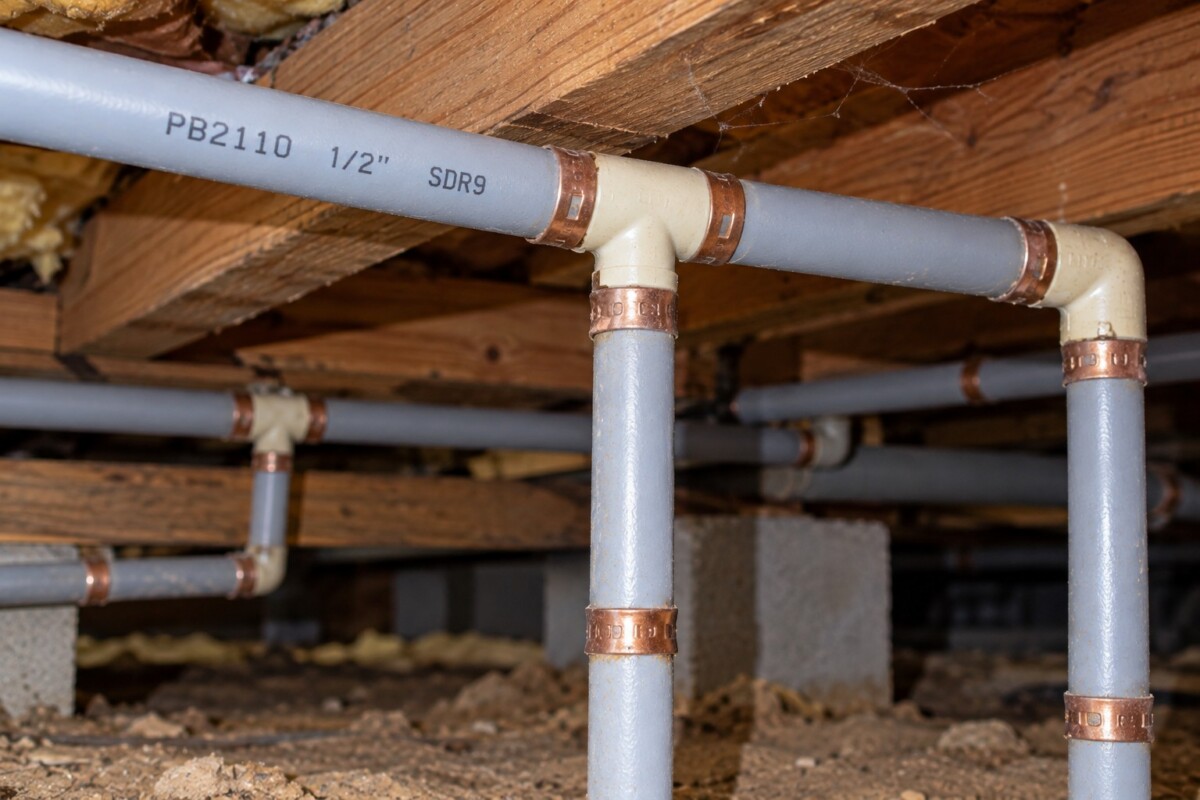
If you’ve been underneath your home and noticed gray plastic water pipes running through your crawl space, you may have polybutylene plumbing.
Polybutylene, commonly called PB piping, was widely used in residential plumbing systems from the late 1970s through the mid-1990s.
At Barry Williams Plumbing, we encounter polybutylene piping in older homes throughout coastal North Carolina. Although some of these systems have lasted for decades, polybutylene has a history of failures that homeowners should understand.
If your home has gray plastic water supply piping, it’s worth finding out exactly what type of pipe you have.
What Is Polybutylene Plumbing?
Polybutylene is a plastic piping material that was once promoted as an affordable and easy-to-install alternative to copper water supply piping.
It was commonly installed in crawl spaces, walls, ceilings, and other areas of residential plumbing systems.
Polybutylene piping is often gray, although it was also manufactured in other colors.
Because of concerns about premature deterioration and leakage, polybutylene eventually fell out of favor for residential water distribution systems in the United States.
How Can I Identify Polybutylene Piping?
One of the easiest ways to identify polybutylene is to examine the printing on the outside of the pipe.
Look for markings such as:
- PB2110
- Polybutylene
- PB
These markings can help distinguish polybutylene from other types of plastic water piping.
Polybutylene is commonly gray, but not every gray plastic pipe is polybutylene. Other plumbing materials can have a similar appearance.
If you cannot identify the markings, a licensed plumber can help determine what type of piping is installed in your home.
Why Is Polybutylene Plumbing a Concern?
Polybutylene piping has been associated with premature deterioration and unexpected leaks.
One concern involves the effects of oxidizing disinfectants, including chlorine, on certain polybutylene plumbing systems.
Over time, chemical exposure and other factors can contribute to deterioration of the piping material.
Some systems have also experienced failures at fittings and connections.
The biggest concern is that a polybutylene system may develop leaks without providing obvious warning signs beforehand.
Does Polybutylene Always Fail?
No. Not every polybutylene plumbing system has failed, and some homes still have functioning systems decades after installation.
However, the fact that a system hasn’t leaked yet doesn’t guarantee that it will remain reliable.
The condition of the piping, its installation, water chemistry, operating pressure, and age can all affect its performance.
Because much of the piping may be concealed inside walls or beneath floors, it can be difficult to evaluate the entire system through a visual inspection alone.
What Should I Look for in My Crawl Space?
If you suspect your home has polybutylene piping, there are several things you can look for without disturbing the plumbing.
- Look for gray plastic water supply pipes. Pay particular attention to piping running between floor joists or connecting to plumbing fixtures.
- Check for pipe markings. Look for PB2110 or other manufacturer markings that identify the material.
- Look for evidence of previous leaks. Water stains, damp insulation, wet soil, or repairs to sections of piping may indicate past or current problems.
- Examine visible fittings. Some older polybutylene systems used plastic fittings, while others used metal fittings. Either type of system should be evaluated based on its overall condition.
- Check the age of your home. Homes constructed or replumbed during the period when polybutylene was commonly installed may be more likely to contain it.
Safety tip: Do not bend, twist, pull, or disconnect older plastic piping while inspecting it. Disturbing an aging system could cause a leak. Avoid entering crawl spaces with standing water, exposed electrical hazards, or unsafe conditions.
Should I Replace My Polybutylene Plumbing?
Replacing polybutylene piping is often worth considering, particularly when the system is aging, has experienced previous leaks, or is located in areas where a failure could cause significant water damage.
However, every home is different.
A professional inspection can help determine the extent of the polybutylene piping and the options available for replacement.
In many homes, replacing the existing piping with a modern material such as PEX can provide a more reliable long-term water distribution system when properly designed and installed.
What Is Involved in Replacing Polybutylene?
Replacing polybutylene water supply piping is commonly referred to as repiping.
Depending on the home’s construction, a repiping project may involve installing new hot and cold water lines through the crawl space, walls, attic, or other accessible areas.
New connections are made to plumbing fixtures, and the system is tested before being placed into service.
The amount of work required depends on the home’s layout, accessibility, number of fixtures, and existing plumbing configuration.
Some homes can be repiped with relatively limited disruption, while others require opening walls or ceilings to reach plumbing connections.
Will Homeowners Insurance Cover Polybutylene?
Insurance coverage varies by company and policy.
Some insurers may have restrictions or underwriting requirements related to polybutylene plumbing.
Coverage for damage from a sudden leak is not necessarily the same as coverage for replacing an aging plumbing system.
If your home contains polybutylene, contact your insurance company to understand any requirements or limitations that apply to your policy.
When Should You Call a Plumber?
If you discover gray plastic piping in your crawl space, notice unexplained moisture, or have experienced repeated water line leaks, it’s a good idea to have your plumbing inspected.
A licensed plumber can identify the piping material, evaluate accessible portions of the system, and explain your replacement options.
Barry Williams Plumbing can help identify polybutylene plumbing in your home and provide recommendations for replacing aging water supply lines with modern piping materials.
If your home has gray plastic water pipes, don’t assume they’re safe or unsafe based on color alone. Identifying the piping material is the first step toward making an informed decision.