


How to Tell if Your Toilet Is Leaking
Have you ever noticed your toilet running when nobody has used it? Or perhaps your water bill has increased for no apparent reason?
At Barry Williams Plumbing, one of the most common plumbing problems we encounter is a leaking toilet. The surprising part is that many toilet leaks are completely silent!
The good news is that there’s a simple test you can perform yourself by turning off the water supply to your toilet and checking the water level in the tank.
Why Do Toilets Leak?
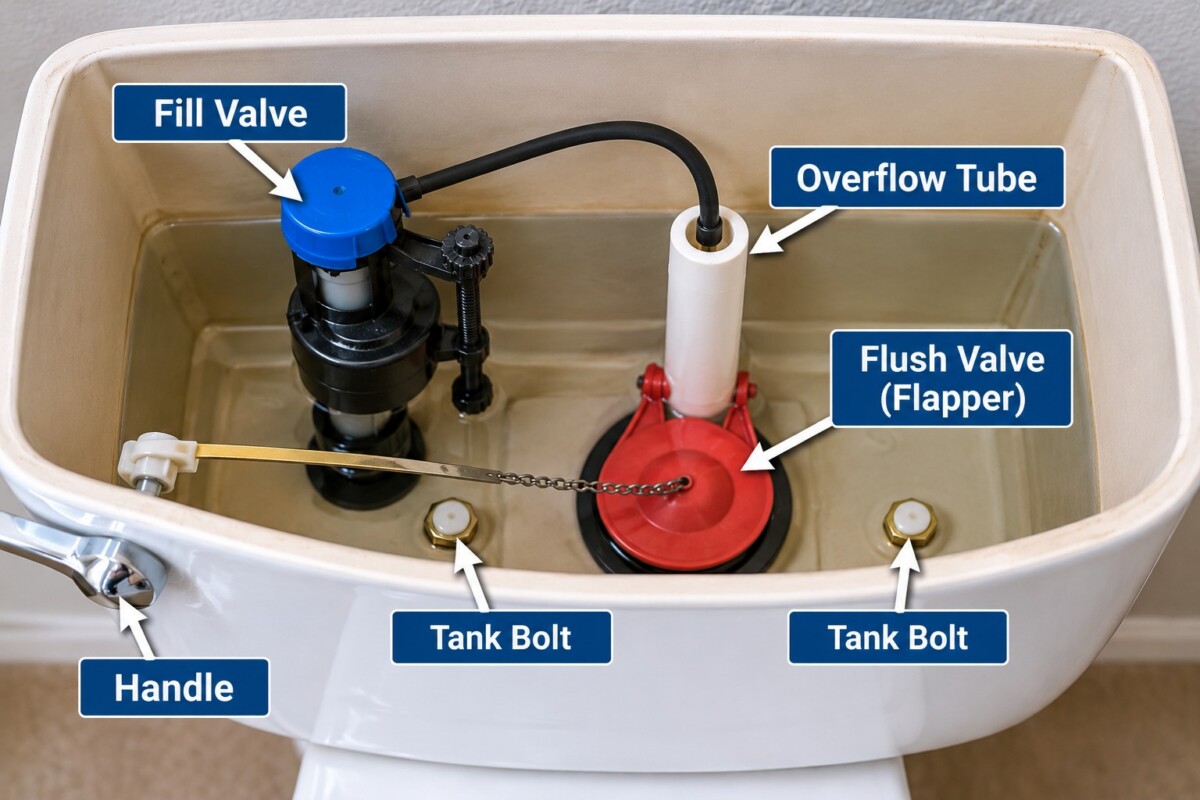
Most toilets have a rubber flapper or another type of flush valve seal at the bottom of the tank. When you flush, this seal opens to release water into the bowl and then closes to allow the tank to refill.
Over time, the seal can deteriorate, warp, or develop mineral deposits that prevent it from sealing properly.
When this happens, water slowly leaks from the tank into the bowl, causing the fill valve to periodically replenish the lost water.
Even a small leak can waste a surprising amount of water over time.
How to Check Your Toilet for Leaks
One of the easiest ways to check for a leaking toilet is to shut off the water supply and see whether the water level inside the tank drops over time.
- Turn off the water supply. Locate the water shutoff valve (water stop) behind or beside your toilet. Turn it clockwise until the water is off. Do not force a stuck or corroded valve.
- Remove the tank lid. Carefully lift the lid and place it somewhere safe.
- Mark the water level. Use a small piece of tape or another removable marker to identify the water level inside the tank.
- Wait at least one hour. For a slow leak, leave the water turned off overnight. Do not flush the toilet during the test.
- Check the water level. If the water level has dropped below your mark, water is escaping from the tank. A worn flapper or flush valve seal is a common cause.
- Turn the water back on. Slowly reopen the shutoff valve and allow the tank to refill.
Important: If the water level drops, the flapper or flush valve seal is a likely culprit, but leaks around the tank bolts, flush valve gasket, or other tank components can also cause water loss. Check for water on the floor as well.
What If You Find a Leak?
The most common cause is a worn or improperly seated flapper or flush valve seal.
In some cases, replacing the flapper is a simple and inexpensive repair. However, not all toilets use the same type of flushing mechanism, so selecting the correct replacement part is important.
Other causes include a damaged flush valve seat, an improperly adjusted fill valve, or water flowing into the overflow tube.
What If Your Toilet Runs Constantly?
If you hear water running continuously, remove the tank lid and check whether water is flowing into the overflow tube.
This may indicate that the fill valve is improperly adjusted or failing.
A toilet that runs continuously should be repaired promptly to avoid unnecessary water consumption.
When Should You Call a Plumber?
If replacing the flapper doesn’t correct the problem, the toilet continues running, or you notice water leaking onto the floor, it’s time to have the toilet inspected.
Barry Williams Plumbing can diagnose leaking toilets, replace worn components, and help prevent unnecessary water waste.
A simple overnight test could save you money on your next water bill!