

Why Do My Water Pipes Make Banging Noises?
Have you ever heard a loud banging noise inside your walls when someone turns off a faucet, flushes a toilet, or finishes using the washing machine?
Sometimes it sounds like someone hitting a pipe with a hammer. Other times, you may hear ticking, knocking, humming, or rattling coming from your plumbing system.
These noises can be annoying, but they may also indicate a plumbing problem that shouldn’t be ignored.
At Barry Williams Plumbing, we know that identifying when a noise occurs is often the first step toward determining what’s causing it.
Let’s look at the most common causes of noisy water pipes, what the different sounds mean, and when repairs may be necessary.
What Is Water Hammer?
One of the most common causes of banging water pipes is a condition known as water hammer.
Water hammer occurs when moving water is suddenly stopped or redirected, creating a pressure surge inside the plumbing system.
For example, when a washing machine’s automatic water valve closes quickly, the water flowing through the supply piping must stop almost instantly.
That sudden change in water movement can create a shock wave that travels through the piping.
The result may be a loud bang, thump, or series of knocking sounds.
Water hammer commonly occurs when:
- A washing machine stops filling.
- A dishwasher’s water valve closes.
- A toilet fill valve shuts off.
- A faucet is closed quickly.
- An automatic irrigation valve closes.
Although occasional minor noises aren’t always evidence of serious damage, repeated or severe water hammer should be investigated.
1. Excessive Water Pressure
High household water pressure can contribute to noisy plumbing and make pressure surges more severe.
When water moves through pipes at higher velocities, quickly closing a valve can create a stronger pressure wave.
Excessive water pressure can also place additional stress on faucets, toilet fill valves, appliance connections, and other plumbing components.
Possible signs of excessive pressure include:
- Loud banging when fixtures shut off.
- Frequent dripping or leaking fixtures.
- Unusually forceful water flow.
- Repeated failures of plumbing supply connections.
Water pressure can be checked using a pressure gauge connected to a suitable hose-threaded connection.
Residential plumbing systems generally should not exceed 80 PSI static water pressure without appropriate pressure regulation, subject to applicable code requirements.
Important: Water hammer can occur even when normal household water pressure is within an acceptable range. High pressure is only one possible contributing factor.
2. Loose or Improperly Secured Water Pipes
Water pipes should be properly supported and secured throughout the home.
When piping is loose, changes in water flow can cause it to move and strike nearby framing, other pipes, or building materials.
This movement may produce banging, knocking, or rattling sounds.
In homes with crawl spaces, loose water piping may be visible beneath the floor.
Common causes include:
- Missing pipe hangers or supports.
- Loose mounting straps.
- Piping installed too close to framing.
- Improperly supported long pipe runs.
- Pipes contacting other plumbing or mechanical components.
Properly securing the piping may reduce or eliminate the noise.
However, pipes must also be allowed to expand and contract as temperatures change. Fastening piping too tightly can create additional noise or stress.
3. Washing Machine Water Hammer
Washing machines are a frequent source of water hammer because they use electrically operated valves that can close very quickly.
When the washing machine stops filling, the sudden interruption of water flow may create a noticeable bang in nearby plumbing.
Sometimes the noise is heard in another room because the pressure wave travels through the piping.
What can help?
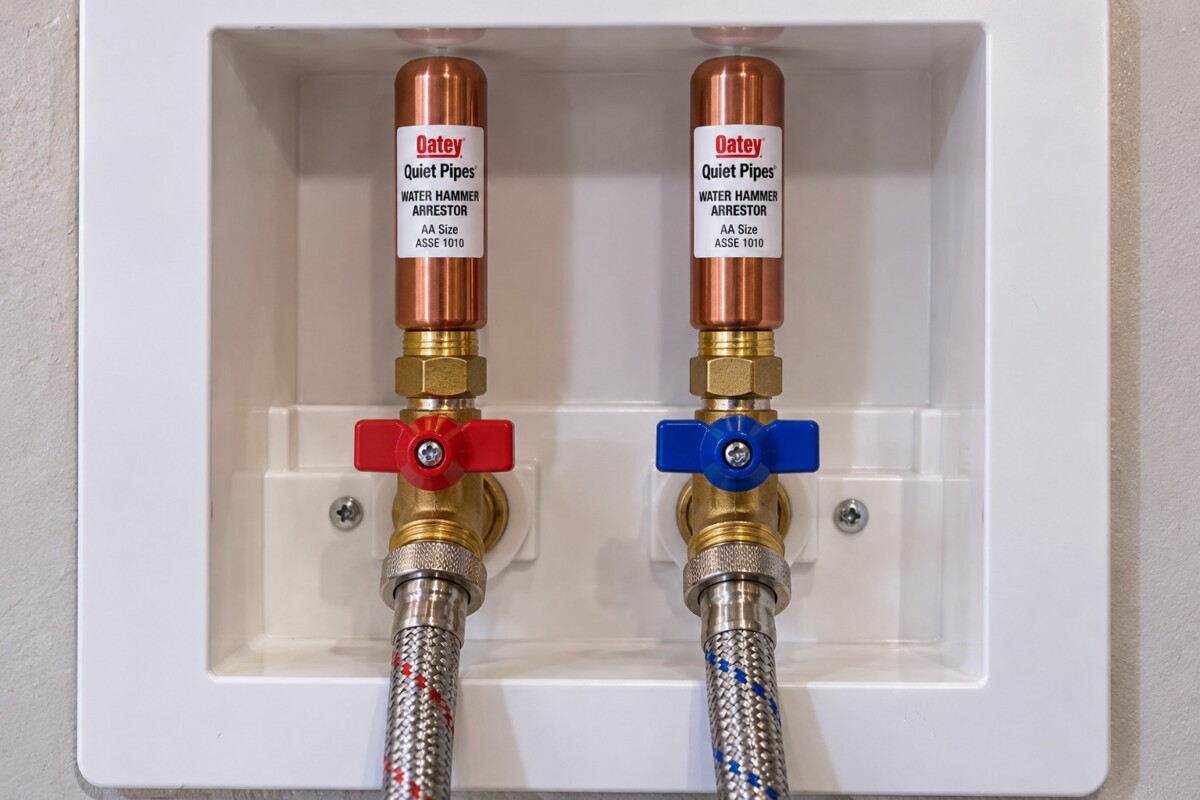
A properly selected and installed water hammer arrestor may help absorb the pressure surge created by the washing machine’s automatic valves.
Water hammer arrestors are commonly installed at washing machine supply connections or other locations where quick-closing valves create pressure surges.
However, if the home’s water pressure is excessive or the piping is poorly supported, those problems should also be addressed.
4. A Failed or Missing Water Hammer Arrestor
A water hammer arrestor is a device designed to absorb sudden pressure surges in a water supply system.
Modern arrestors typically contain a sealed gas cushion separated from the water by a piston or diaphragm.
When a valve closes suddenly, the arrestor helps absorb the resulting pressure wave.
Some older plumbing installations relied on capped vertical sections of pipe known as air chambers.
Over time, traditional air chambers can become waterlogged and lose their effectiveness.
Important: Not every banging noise requires a water hammer arrestor. The correct solution depends on whether the noise is caused by a pressure surge, loose piping, thermal expansion, or another problem.
5. Thermal Expansion of Hot Water Pipes
Not every plumbing noise is caused by water hammer.
Hot water piping expands slightly as its temperature increases and contracts as it cools.
As pipes move against framing, supports, or other building materials, they may produce ticking, clicking, or popping sounds.
These noises are often noticed shortly after someone begins using hot water or after the hot water flow stops.
Common signs include:
- Ticking sounds inside walls after hot water is used.
- Clicking noises that gradually slow down.
- Noises that occur without anyone suddenly shutting off a valve.
- Sounds concentrated near hot water piping.
Proper pipe supports, protective sleeves, and clearance around piping can help reduce unwanted noise from thermal expansion.
6. A Problem With the Water Pressure Regulator
Some homes connected to municipal water systems have a pressure-reducing valve, commonly called a PRV.
The regulator reduces incoming municipal water pressure to a more suitable level for household plumbing.
If a regulator becomes worn, unstable, or defective, it may contribute to pressure fluctuations, vibration, or unusual plumbing noises.
Depending on the condition, homeowners may notice humming, chattering, or inconsistent water pressure.
Possible symptoms include:
- Water pressure that changes unexpectedly.
- Humming or vibration when water is running.
- Pressure readings that are unusually high or unstable.
- Noises occurring at several fixtures.
Testing the regulator and water pressure can help determine whether the PRV is contributing to the problem.
7. A Failing Toilet Fill Valve
Sometimes a banging or vibrating noise originates from the toilet rather than the water piping itself.
As a toilet tank refills, the fill valve controls the incoming water.
If the valve is worn or malfunctioning, it may chatter, vibrate, whistle, or close abruptly.
The resulting noise can travel through the connected supply piping.
What to look for: If the noise occurs consistently near the end of a toilet’s refill cycle, the fill valve may be involved.
Replacing a defective fill valve may correct the problem, but persistent banging may also require evaluation of household water pressure and pipe support.
8. Water Heater Thermal Expansion
When water is heated, its volume increases slightly.
In a closed plumbing system, such as one equipped with a backflow prevention device or certain pressure-reducing valves, that expansion can increase system pressure.
A properly sized thermal expansion tank can help accommodate the increase in water volume.
If the expansion tank is missing, incorrectly charged, or defective, pressure fluctuations may place additional stress on plumbing components.
Important: A thermal expansion tank and a water hammer arrestor perform different functions.
- Thermal expansion tank: Accommodates water expansion caused by heating in a closed plumbing system.
- Water hammer arrestor: Helps absorb sudden pressure surges caused by rapidly closing valves.
Installing an expansion tank is not a substitute for correcting a true water hammer problem.
9. Whistling, Humming, and Other Plumbing Noises
Not all plumbing noises sound like banging. Different sounds can provide useful clues about the source of a problem.
Whistling: May indicate water passing through a restricted opening, worn valve, or partially closed supply connection.
Humming: Can result from vibration in a valve, pressure regulator, or another component while water is flowing.
Rattling: Often indicates loose piping, supports, or fixtures vibrating during water use.
Ticking: Frequently associated with expansion and contraction of hot water piping.
Gurgling: More commonly associated with drainage or venting problems rather than pressurized water supply piping.
Because several problems can produce similar sounds, the timing and location of the noise are often more useful than the sound alone.
How Can You Figure Out What’s Causing the Noise?
Before calling a plumber, pay attention to when the noise occurs.
- When does the noise happen? Does it occur when a faucet shuts off, a toilet finishes filling, or the washing machine stops?
- Is the sound a bang or a ticking noise? Sudden banging may suggest water hammer, while repeated ticking after hot water use may indicate thermal expansion.
- Does the noise occur at one fixture? If it happens only when the washing machine operates, that fixture may be contributing to the problem.
- Does the entire house seem affected? Noises at several fixtures may point toward a broader water pressure or piping issue.
- Are any pipes visibly loose? Look at accessible piping for missing supports or obvious movement without disturbing electrical equipment or unsafe areas.
- Has the problem recently become worse? A new or increasingly loud noise may indicate a developing problem that deserves attention.
These observations can help your plumber diagnose the problem more efficiently.
Can Banging Water Pipes Cause Damage?
Repeated severe water hammer can place stress on pipe joints, valves, fittings, and other plumbing components.
Loose piping may also experience wear from repeated movement against framing or other materials.
While not every noise indicates immediate danger, persistent loud banging should not be ignored.
Correcting the underlying problem may help reduce unnecessary stress on the plumbing system and prevent future leaks or component failures.
When Should You Call a Plumber?
If your water pipes bang loudly whenever a fixture shuts off, the noise is getting worse, or you notice pressure fluctuations or leaks, a professional plumbing inspection is recommended.
Depending on the cause, the solution may involve:
- Checking and correcting excessive water pressure.
- Repairing or replacing a pressure regulator.
- Installing properly sized water hammer arrestors.
- Securing loose water piping.
- Repairing or replacing malfunctioning fixture valves.
- Evaluating thermal expansion control where appropriate.
When Should You Call Barry Williams Plumbing?
Unusual plumbing noises can be frustrating, especially when the source is hidden inside walls or beneath the floor.
Rather than guessing at the cause, it’s important to determine whether the problem involves water hammer, loose piping, excessive pressure, or a malfunctioning plumbing component.
Barry Williams Plumbing can help diagnose noisy water pipes, evaluate household water pressure, inspect accessible piping, and recommend appropriate plumbing repairs.
Your plumbing system shouldn’t sound like someone is banging on the walls. Identifying the source of the noise is the first step toward restoring quieter, more dependable plumbing.